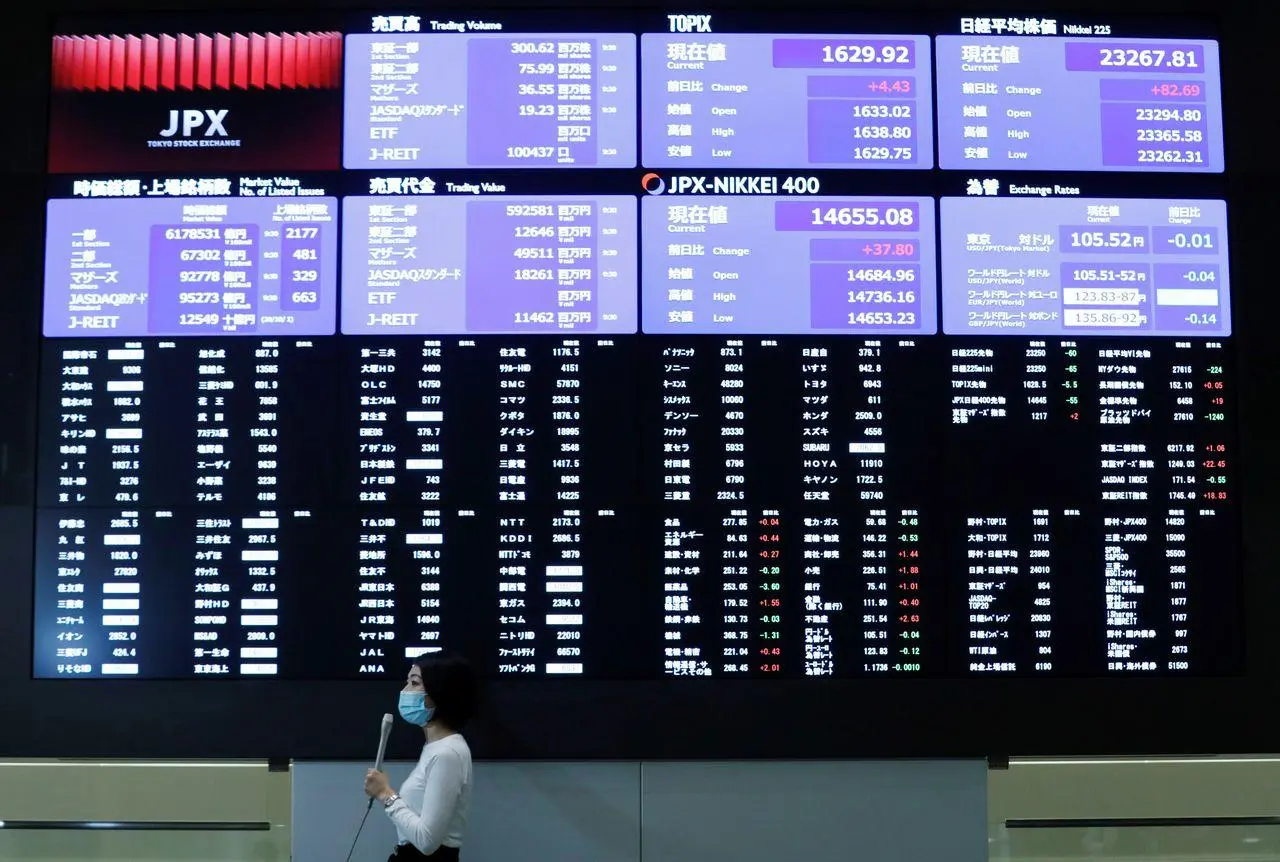
Asian financial markets remained cautious on Thursday as investors balanced optimism over technology-sector earnings against renewed geopolitical concerns in the Middle East. Japan’s Nikkei Stock Average edged up 0.3% to 64,828.16 in early trading, supported by gains on Wall Street, although broader risk sentiment remained fragile.
The market environment reflects competing forces. Strong earnings from AI-related companies have helped ease concerns that the recent wave of investment in artificial intelligence infrastructure may be difficult to sustain. At the same time, rising oil prices and reports of potential military escalation involving Iran have encouraged investors to remain selective.
Technology Earnings Provide Some Support
Recent results from companies connected to AI infrastructure have helped support sentiment. Investors are looking for evidence that substantial spending on data centers, computing hardware and related services is translating into sustainable revenue and profits.
However, the market is not responding to earnings alone. Investors are also assessing corporate balance sheets, financing needs and whether the expected returns from AI investment will justify the scale of spending. This has created a more selective environment in which positive results from some companies do not necessarily lift the entire technology sector.
Middle East Tensions Limit Risk Appetite
Renewed concerns over the Middle East have complicated the outlook. Reports of escalating attacks and preparations for possible military action have contributed to higher oil prices and uncertainty over energy supply.
Higher energy prices can affect markets through several channels. They raise costs for transport and industry, potentially reduce consumer purchasing power and complicate the inflation outlook. If inflation remains elevated, central banks may be less willing to lower interest rates, which can pressure equity valuations.
Central Bank Decisions Remain in Focus
The Bank of Korea held its benchmark rate at 3.00% on Thursday, in line with expectations. Its decision highlights the challenge facing central banks: inflation remains above target, but tighter policy can weigh on economic activity and financial markets.
Investors are also preparing for upcoming policy decisions from major central banks, including the Federal Reserve. The combination of corporate earnings, interest-rate expectations and geopolitical developments is likely to keep markets sensitive to new information.
What Investors Should Watch
Investors will monitor additional technology earnings, changes in oil prices, government bond yields and developments in the Middle East. The Nikkei’s modest advance indicates that positive corporate results can provide support, but the wider market remains vulnerable to sudden changes in risk sentiment.