
Indonesia Changes the IHSG Constituents as Market Transparency Comes Under Scrutiny
Changes to the IHSG Calculation
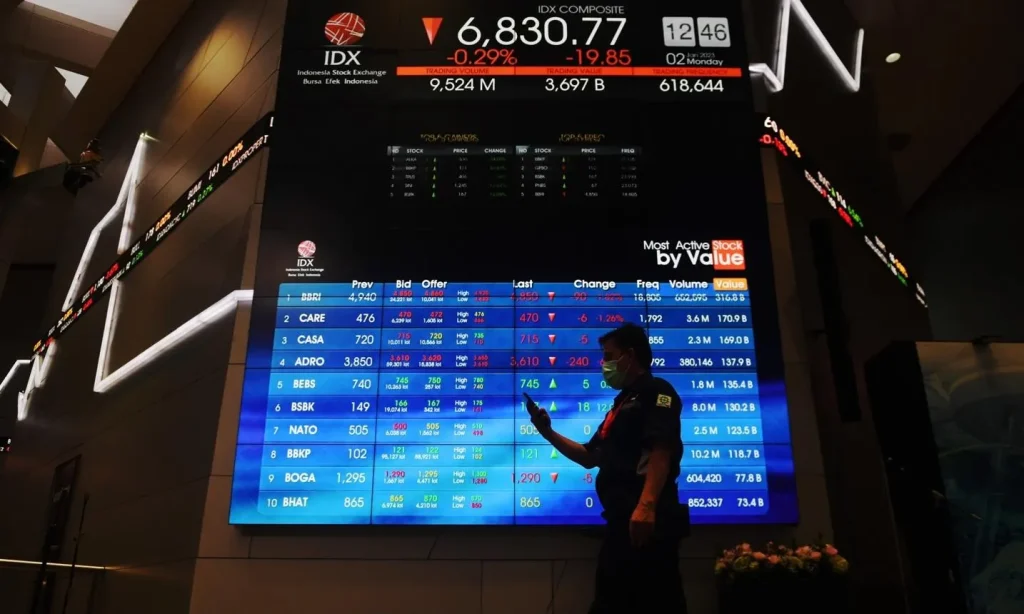
Indonesia’s stock exchange began applying a change to the calculation of the Jakarta Composite Index (IHSG) on November 2. The change removes 82 stocks classified as having high shareholding concentration, or HSC, from the index calculation.
According to Katadata, the number of stocks included in the calculation consequently fell from 963 to 881. The affected list includes several companies with substantial market capitalization. These include DCI Indonesia, Bayan Resources, Barito Renewables Energy and Dian Swastatika Sentosa.
The change is part of a broader effort to address concerns about Indonesia’s stock-market structure. The concerns emerged after MSCI opened a consultation regarding the country’s market classification.
International index providers consider factors such as investable free float, accessibility and the ability of institutional investors to trade securities efficiently. Therefore, concentrated ownership can raise questions about how much stock is genuinely available for public investment. It can also raise questions about whether index weights accurately represent the investable market.
The Indonesian Stock Exchange said the change would not alter the IHSG’s starting level. The exchange adjusted the index divisor to preserve the starting level.
In index calculations, a divisor helps preserve continuity when constituents or calculation rules change. Therefore, removing stocks does not automatically imply an equivalent immediate fall in the index.
However, the composition and relative weights of the remaining constituents can change. As a result, individual stocks may have a different influence on daily index movements.
What the Change Means for Investors
Investors will need to distinguish between a mechanical change in index calculation and actual buying or selling pressure.
The revised index may become more representative of stocks considered available for investment. However, the transition can also prompt portfolio adjustments among investors who track the benchmark.
The scale of any resulting market activity depends on fund mandates, index methodologies and how institutions respond to the new calculation.
The decision comes at a difficult time for Indonesian equities. Separate reporting by Liputan6 said the IHSG had fallen 7.03% over the preceding week. Foreign investors also remained net sellers.
Meanwhile, the rupiah was under pressure. This added another source of uncertainty for investors assessing local assets.
These market conditions mean that the new methodology will be introduced while confidence is already sensitive to regulatory and capital-flow developments.
What Traders Should Watch
For traders, the most important issue is how the new calculation changes index exposure and market breadth.
Stocks removed from the calculation may still be tradable securities. Their exclusion from the IHSG calculation does not itself mean that the companies have been delisted.
Therefore, traders should review official exchange notices, constituent lists and subsequent market data before drawing conclusions about individual shares.
Broader Implications for the Market
The broader implication is that market transparency and investability have become important factors in Indonesia’s relationship with global capital.
The reform could support confidence if it improves the quality of the index. However, the effect will depend on implementation and whether investors consider the underlying concerns adequately addressed.