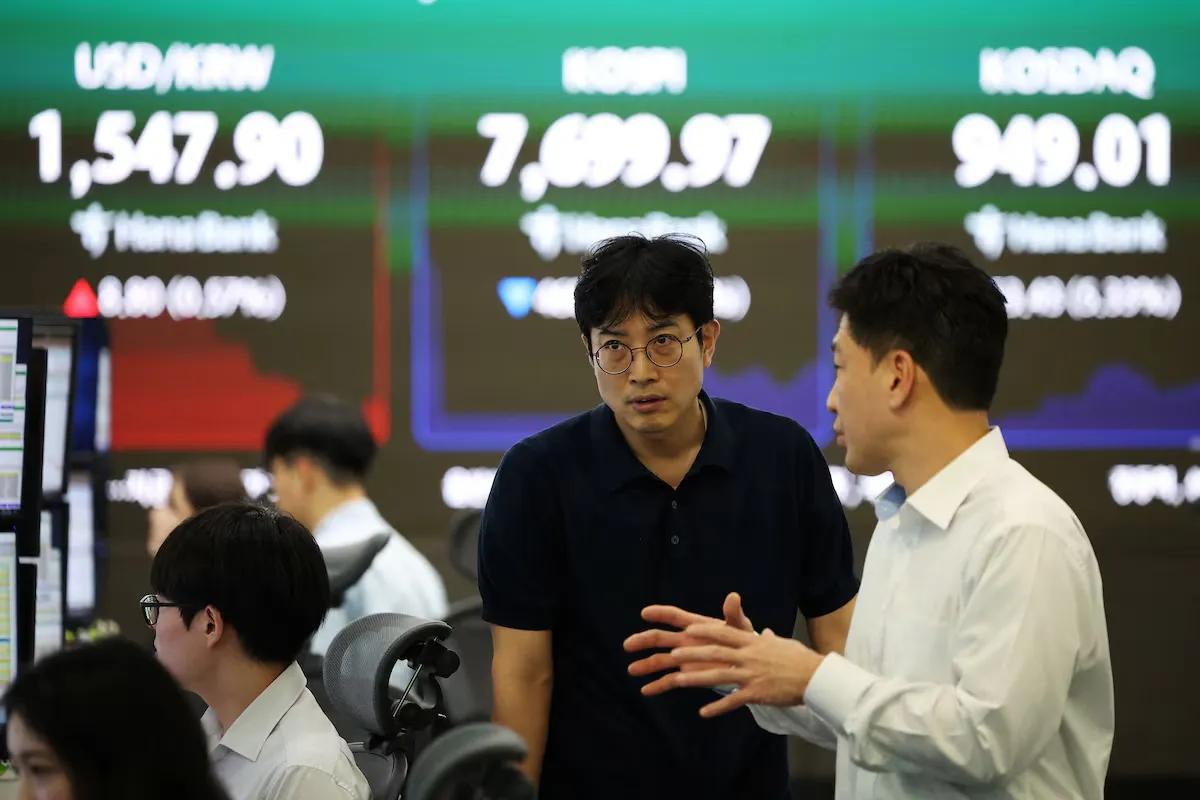
South Korean Stock Market Suffers a Sharp Sell-Off
South Korea’s benchmark KOSPI index plunged more than 8% during early trading on Friday, November 6, triggering an automatic circuit breaker as technology and semiconductor shares led a broad market sell-off. The index fell below the 5,000-point level for the first time in nine months, highlighting the severity of the decline across one of Asia’s most important technology-focused equity markets.
The Korea Exchange activated a 20-minute circuit breaker at 9:03 a.m. local time, temporarily suspending trading in stocks and derivatives. At 00:26 GMT, the KOSPI was down approximately 500 points, or 8.6%, to 4,923.47.
Technology and Semiconductor Stocks Lead the Decline
Samsung Electronics and SK Hynix Face Heavy Selling
The sharpest losses were concentrated among major semiconductor companies. Samsung Electronics shares fell 10%, while SK Hynix declined 13%. These companies are important suppliers within the global semiconductor industry and have benefited significantly from demand related to artificial intelligence infrastructure.
Other major companies also experienced substantial declines. LG Energy Solution dropped 4%, Hyundai Motor lost 6.9%, and Kia declined 4%.
AI Investment Concerns Spread Across Asian Markets
The sell-off followed the worst single-day performance in more than a year for US stock markets on Thursday. Technology and semiconductor shares in particular experienced significant selling pressure as investors reconsidered the profitability and future pace of investment in artificial intelligence infrastructure.
Democratic gains in the US midterm elections increased uncertainty about potential regulatory restrictions on data-centre construction. Investors are concerned that political opposition to electricity costs and infrastructure expansion could slow the development of AI facilities, reducing future demand for chips and related equipment.
Jun Kwang-woo, chairman of Seoul-based Institute for Global Economics and former head of South Korea’s National Pension Service, described the decline as a correction but suggested that the market reaction to the election outcome could be excessive.
He also expressed hope that the market would stabilise as investors reassessed concerns about the pace of AI infrastructure development.