Asian markets recover modestly after Wall Street pares losses
Asian stock markets moved higher on Thursday, November 26. The recovery followed a rebound in US equities after steep early losses in the previous session. It offered some relief after a sharp sell-off in technology shares. However, investor confidence remained fragile. Concerns about AI investment, corporate valuations and possible additional US tariffs continued to weigh on sentiment.
Reuters reported a 1.6% gain in Japan’s Nikkei 225. South Korea’s main stock index also rose 1.9%. Meanwhile, the broader Asia-Pacific index excluding Japan edged up 0.6%. Despite these daily gains, regional markets remained significantly lower for November. Japan’s market was still down around 8% for the month. South Korea had lost approximately 16%, while Taiwan was down around 15%. The regional index excluding Japan remained about 9% lower.
The recovery followed a volatile Wall Street session on Wednesday. The S&P 500 finished down 0.3% at 7,182.78. However, the index had fallen as much as 3.2% during the session. The Nasdaq Composite declined 0.6% to 23,585.80. In contrast, the Dow Jones Industrial Average gained 164 points, or 0.3%, to 50,182.95. The Russell 2000 also advanced 0.7% to 2,704.06, according to Associated Press.
The intraday recovery showed renewed buying interest in selected shares after the initial decline. However, it did not erase the broader concerns behind the sell-off. Investors continued to distinguish between companies benefiting from resilient economic activity and technology businesses facing valuation concerns. The sustainability of AI-related spending remained a particular source of uncertainty.
Nvidia and concerns over AI investment remain central
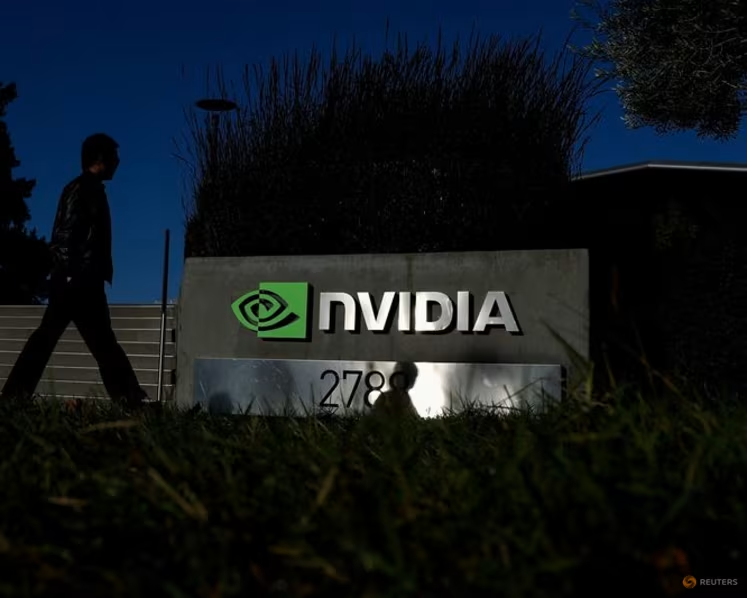
Nvidia remained a major focus after its shares fell 3.9% on Wednesday to $149.30. Reuters reported that S&P had placed the chipmaker’s credit rating on watch for a possible downgrade. The agency cited concerns about management and board oversight. This development added uncertainty around a company central to the global expansion of AI infrastructure.
Investors have increasingly examined how companies finance data-centre construction. They also want to understand whether AI-related investment can generate sustainable revenue. Rapid infrastructure expansion has created substantial demand for high-performance processors, memory and networking equipment. However, the scale of capital expenditure has raised questions about returns and funding. Investors also worry that some spending may involve circular financing or depend on a limited number of large customers.
Nvidia’s importance in major equity indices also contributes to the pressure. The company has a large market value and significant index weighting. Therefore, sharp share-price movements can affect the broader technology sector and the Nasdaq. As a result, declines in AI-linked shares influenced markets beyond individual company performance.
New US tariff proposals add uncertainty to trade outlook
Trade policy remained another concern for investors. Reuters reported that the US administration had proposed additional tariffs involving 14 major trading partners. These included China, Japan and the European Union. Washington said the measures aimed to address what it describes as structural excess industrial capacity among trading partners.
According to the report, the proposed duties would not simply add to the tariffs imposed in July. US Trade Representative Jamieson Greer explained the approach in a CNBC interview. He said the new measures would largely remain aligned with rates established through trade agreements. However, authorities could increase some rates by a few percentage points.
The final tariff rates, product coverage and implementation schedule will determine the potential market impact. Even a limited increase can influence sourcing decisions and manufacturing costs. This is particularly relevant for companies that rely on cross-border supply chains. Asian economies with large electronics, automotive and industrial-export sectors face particular exposure.
US economic data and the Thanksgiving holiday shape trading conditions
Markets also assessed new US economic information released on November 25. The Bureau of Economic Analysis revised third-quarter GDP growth to an annualised 4.3%. Meanwhile, October core PCE inflation rose to 3.3% year over year. These figures highlighted the contrast between strong economic activity and persistent price pressures.
US Treasury yields nevertheless fell to multi-week lows during the volatile equity session. Investors assessed the technology sell-off and its potential effects on financial conditions. They also considered whether weaker conditions could influence future monetary policy. Markets continued to price a high probability of a December Federal Reserve rate increase. However, expectations of a larger move diminished.
The US Thanksgiving holiday also affects trading conditions on November 26. US cash equity and bond markets are closed for the holiday. This leaves global markets with fewer major liquidity centres during the session. Consequently, thinner trading activity can amplify price movements. This risk becomes more relevant when Asian and European markets account for a larger share of global trading activity.