Asian Stocks Rise as Nasdaq Hits Record
Asian stocks moved higher on Tuesday after a technology-led rally pushed the Nasdaq to a record closing high, while softer U.S. employment data reduced expectations for an immediate Federal Reserve interest-rate increase. The move gave investors some relief even as longer-dated U.S. Treasury yields remained close to their highest levels in decades.
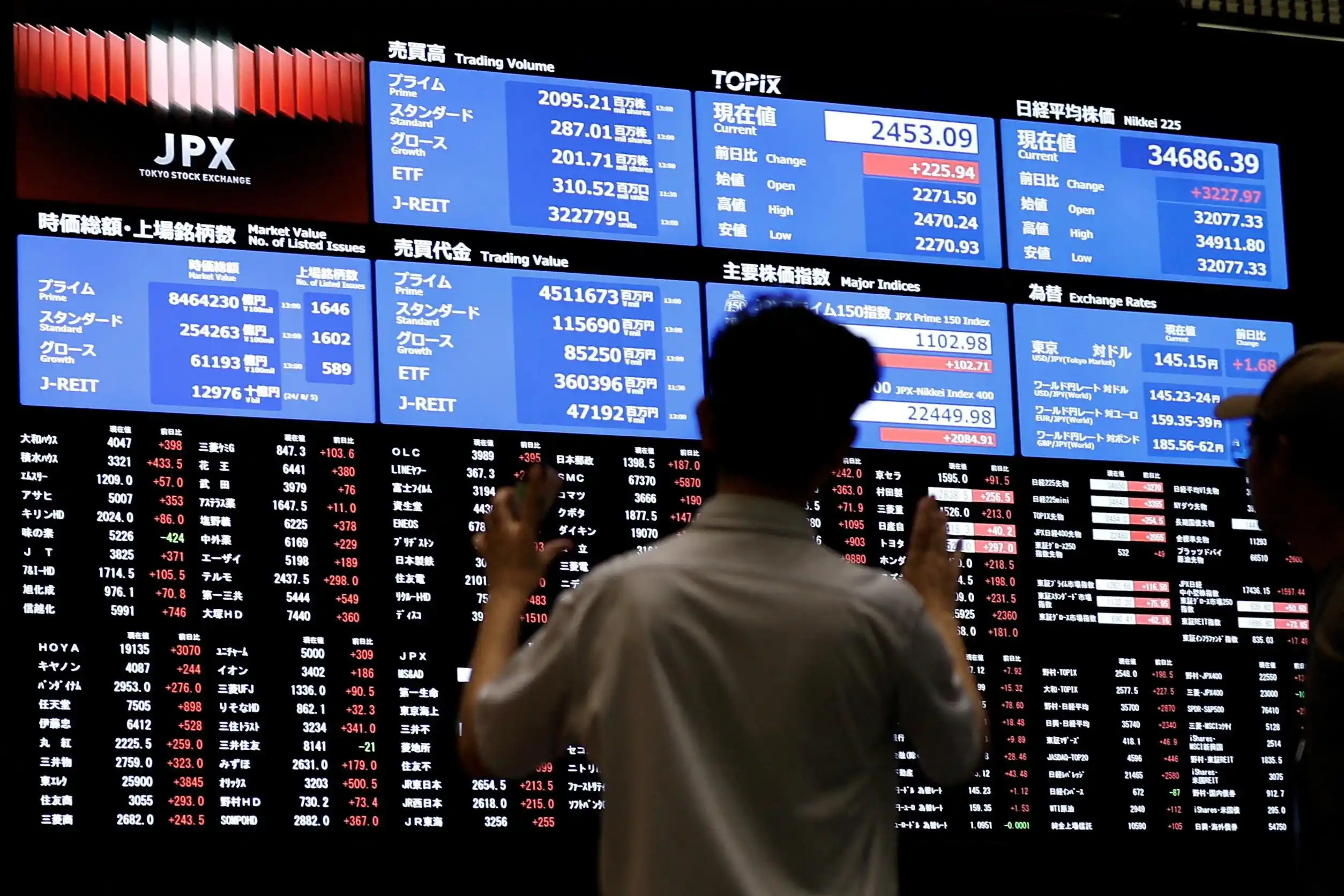
Japan’s Nikkei rose 1.1%, while Hong Kong’s Hang Seng gained 0.7%. South Korean shares declined nearly 1% after returning from a public holiday. Futures pointed to a higher European open, with pan-European stock futures up 0.3%.
Technology stocks lead the rally
The latest gains were concentrated in large technology companies. Nvidia rose 2.1% to another record close, pushing its market value to around $5.76 trillion.
Investors are increasingly focused on the upcoming third-quarter earnings season, which begins next week. Goldman Sachs estimates that consensus expectations point to 27% growth in S&P 500 earnings for the quarter, with more than half of that growth coming from companies benefiting from spending on artificial intelligence infrastructure.
The technology rally has been supported by a combination of strong earnings expectations and a slight reduction in interest-rate uncertainty.
Treasury yields remain the major concern
The stock-market gains have taken place alongside continued weakness in the U.S. government bond market. Ten-year and 30-year Treasury yields reached fresh 24-year highs overnight.
The rise in long-term yields has been driven by concerns over inflation and government debt. A recent ISM services survey also showed that prices paid by service-sector companies for inputs rose to their highest level in more than four years.
At the same time, markets sharply reduced expectations for a Federal Reserve rate increase this month. The probability of an October hike fell to around 23%, compared with 71% one week earlier.
The conflicting signals leave investors balancing strong equity-market momentum against elevated borrowing costs and persistent inflation risks.