North Korea Fires Unidentified Projectile Toward Its East Coast, Seoul Says
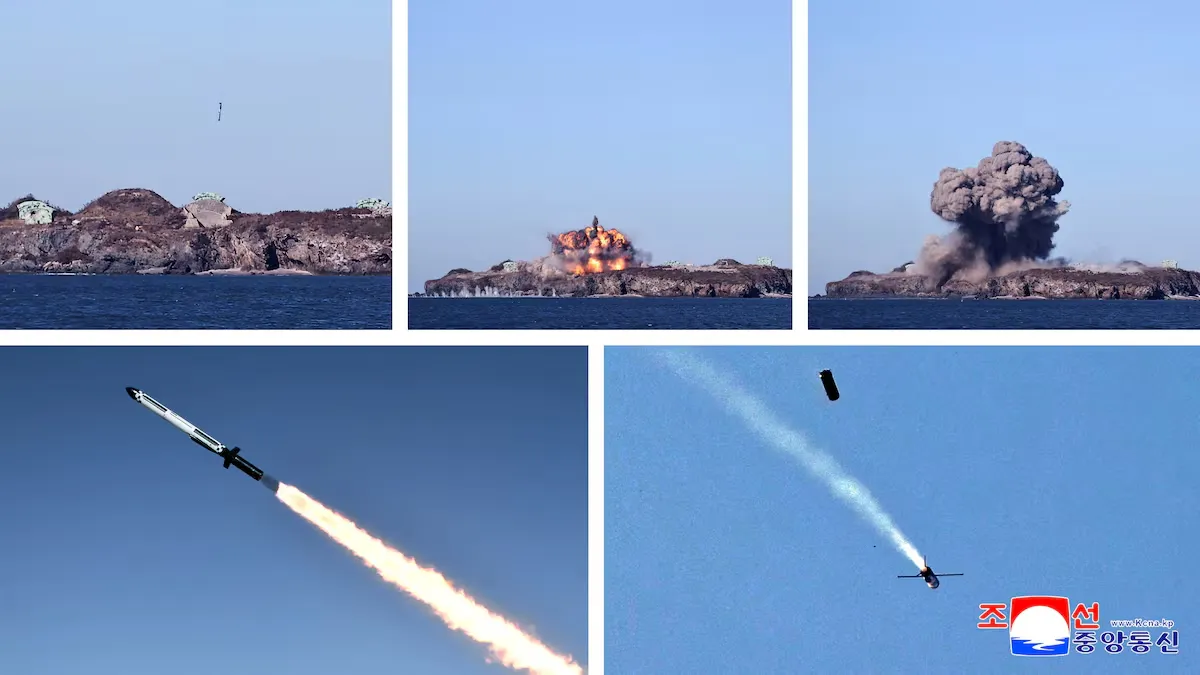
North Korea fired an unidentified projectile toward the sea off its east coast on Wednesday, November 4. South Korea’s Defence Ministry announced the launch. It appeared to be the latest in a series of weapons-related activities by Pyongyang.
The launch came hours after Kim Yo Jong, the powerful sister of North Korean leader Kim Jong Un, ruled out dialogue with Washington. She said the United States must abandon what she described as a hostile policy toward North Korea. Pyongyang has conducted multiple weapons tests this year. These include a missile that travelled more than 900 kilometres and tests involving hypersonic missiles.
South Korean authorities did not immediately provide further details. The initial announcement cited by Reuters contained no additional information about the projectile.
Weapons Activity and Regional Security
The latest launch adds to a pattern of military activity that has kept security concerns high on the Korean Peninsula. North Korea continues to develop and test weapons. It also maintains a confrontational position toward the United States.
The launch also followed a report in North Korean state media. The report said Kim Jong Un had visited a naval shipyard where workers were building a destroyer. During the visit, he stressed the importance of maintaining a powerful naval force.
Lee Choon-geun, a missile expert and board member at the Korea Advanced Institute of Science and Technology, told Reuters that repeated tests could indicate preparations for mass production or potential exports. He noted that weapons typically require multiple tests before entering large-scale production or deployment.
However, the initial report did not establish the purpose of the latest launch. It also provided no technical details about the projectile.
Potential Implications for Markets
Developments on the Korean Peninsula can influence regional risk sentiment. This is particularly relevant to South Korea and Japan, where markets remain sensitive to security tensions. Further escalation could affect investor confidence and increase demand for assets perceived as defensive.
Nevertheless, the launch alone does not establish its immediate market impact. Investors would need to assess whether the incident triggers further military activity, official responses or changes in diplomatic relations.
The report did not establish that the launch had caused a specific move in financial markets. At this stage, its significance lies primarily in continued security tensions and the possibility of further developments.