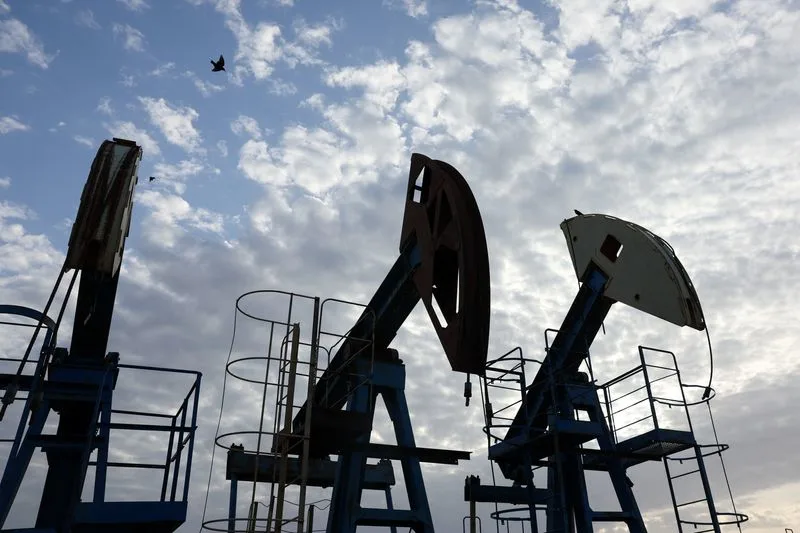
Oil Prices Retreat After Recent Gains
Oil prices fell on Monday after US President Donald Trump waived sanctions and tariffs on Russia, a move that could allow more Russian fuel to enter global markets.
Brent crude futures fell $1.94, or 1.77%, to $107.92 a barrel by 0227 GMT. US West Texas Intermediate crude declined 83 cents, or 0.82%, to $100.58 a barrel. The pullback followed Friday’s rise, when Brent settled at its highest level since May 19 and WTI closed at its highest since September 17.
Brent had briefly reached $110 a barrel on Friday for the first time since May. That increase reflected concerns about shipping safety and tighter energy supplies as tensions in the Middle East intensified.
US Policy Could Increase Russian Fuel Exports
Trump signed an executive order on Friday waiving key sanctions and tariffs under the Graham Act, legislation introduced to pressure Moscow over its war in Ukraine. However, US Secretary of State Marco Rubio said the president would take up to 60 days to assess the economic impact of the sanctions and tariffs on the global economy.
The decision followed an announced arrangement between Trump and Russian President Vladimir Putin for Russia to export diesel to the United States and other countries. According to Trump’s announcement, shipments would begin at about 2.3 million barrels during the month and subsequently rise to approximately 7.6 million barrels per month.
Ukrainian President Volodymyr Zelenskiy said the US actions would hurt Ukraine.
Market participants were weighing the possibility of additional Russian supplies against uncertainty over how the waiver would be implemented. Tim Waterer, chief market analyst at KCM Trade, said a softer sanctions stance and profit-taking after recent gains were helping limit near-term price increases.
He added that the market was unlikely to fully price in a sustained increase in supply until the details and duration of the policy became clearer.
Middle East Shipping Disruptions Continue to Threaten Supply
Despite the prospect of additional Russian fuel exports, disruptions in the Middle East remained a concern for energy markets.
Analytics firm Kpler said intensified attacks on commercial vessels sharply reduced crude flows from the Gulf. The seven-day average fell to about 8.5 million barrels per day in the previous week, from more than 20 million barrels per day in the week before.
Kpler also reported at least 10 confirmed incidents involving commercial vessels during the week.
Egypt said it was ready to provide Saudi Arabia with the support needed to defend its security and stability against Yemen’s Iran-aligned Houthi movement. The statement added to concerns about regional tensions and the security of energy transportation routes.
The oil market therefore faced competing forces: the possibility of increased Russian supply could put downward pressure on prices, while continuing attacks on commercial shipping could constrain exports and limit the decline.