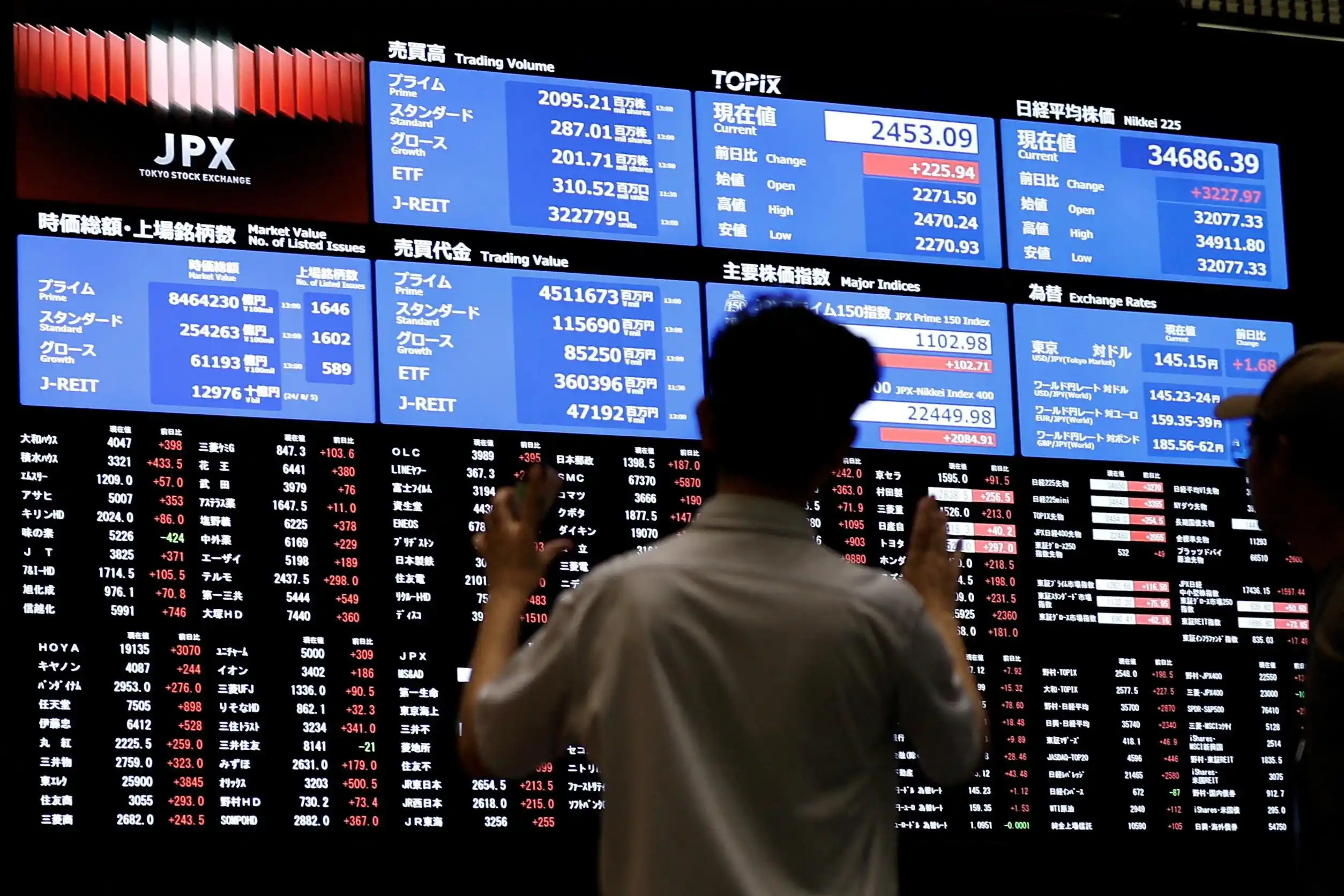
Asian Stocks Weaken as AI Debt Grows
Asian stocks edged lower on Thursday as pressure in global bond markets intensified and major technology companies sought billions of dollars in new debt to finance artificial intelligence investments.
Japan’s Nikkei fell 0.9%, while South Korean shares declined 0.6%. MSCI’s broadest index of Asia-Pacific shares outside Japan slipped 0.1%.
The weakness followed a renewed rise in oil prices and continued concerns over inflation, government deficits and borrowing costs.
AI investment shifts toward debt
Reports that major technology companies are seeking large amounts of financing have added another layer of concern for investors.
Broadcom is seeking around $50 billion in financing, while SpaceX is reportedly planning to issue $30 billion in investment-grade bonds and raise another $10 billion in loans to purchase AI chips from Nvidia.
The increased use of debt to finance AI infrastructure is raising questions about credit risk and the ability of companies to generate sufficient returns from their investments.
Credit default insurance on SpaceX rose to record levels while its shares and bonds came under pressure.
Bond yields remain elevated
The corporate borrowing wave comes as sovereign bond markets are already facing pressure from inflation concerns, large government deficits and higher interest rates.
The Federal Reserve’s latest meeting minutes showed that most policymakers considered another rate increase likely before the end of the year. Markets currently price in only around a 19% probability of an October hike, while the probability of a December increase is around 80%.
The U.S. 10-year Treasury yield remained close to a 24-year high at around 5.298%, while the two-year yield was near 4.78%.
European bond markets also remained under pressure, particularly France, where concerns about government finances have spread to other countries including Italy and Greece.
The combination of higher borrowing costs, increased corporate debt and expensive AI investment is keeping investors cautious even as parts of the equity market continue to benefit from strong technology earnings expectations.