One Dollar, Five Markets
Forex trading is often approached one currency pair at a time. Gold traders may focus on XAU/USD, while currency traders watch EUR/USD, GBP/USD, USD/JPY or AUD/USD. However, these markets can share an important influence: the US dollar.
Understanding this connection can help traders build a broader view of the market. Instead of reading each chart in isolation, traders can compare how different instruments respond to the same economic developments.
Why the US Dollar Matters
The US dollar plays a central role in global currency trading. It is also the quote currency in XAU/USD, EUR/USD, GBP/USD and AUD/USD, while it is the base currency in USD/JPY.
This difference matters when reading price movements. A stronger dollar can put downward pressure on EUR/USD, GBP/USD and AUD/USD, while potentially pushing USD/JPY higher. Gold may also face pressure when dollar strength changes its relative cost for buyers using other currencies.
These are possible relationships, not fixed rules. Market expectations, interest rates, economic data and investor sentiment can change the outcome.
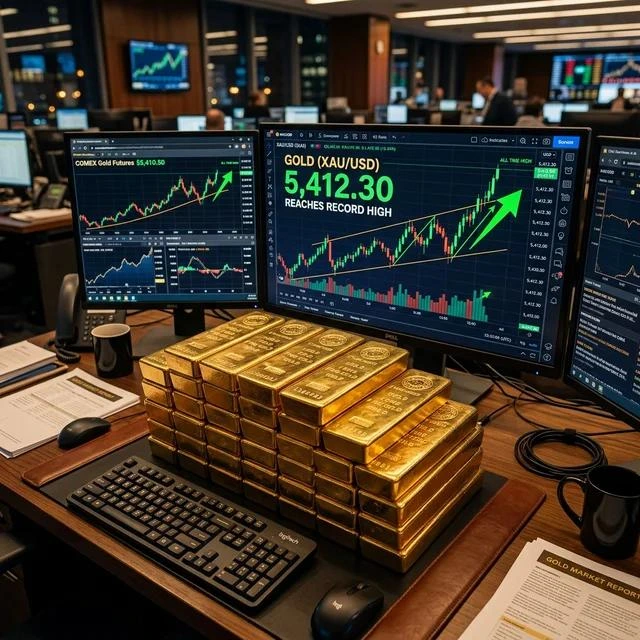
Five Instruments, Different Market Responses
1. XAU/USD: Gold and Dollar Strength
Gold traders often monitor the dollar, interest rates and demand for safe-haven assets. A stronger dollar can weigh on gold, but geopolitical uncertainty or changing interest-rate expectations can produce a different reaction.
2. EUR/USD: The Euro’s Response
EUR/USD reflects the relative strength of the euro and the US dollar. European economic data and European Central Bank policy can influence the pair independently of US developments.
3. GBP/USD: The Pound’s Own Drivers
GBP/USD may react to US dollar movements, but UK inflation, employment data and Bank of England decisions can also shape its direction.
4. USD/JPY: A Different Dollar Relationship
USD/JPY places the dollar first and the yen second. Interest-rate differences between the United States and Japan can be especially important when analyzing this pair.
5. AUD/USD: More Than a Dollar Trade
AUD/USD is influenced by US dollar strength as well as Australian economic conditions, commodity demand and expectations for Reserve Bank of Australia policy.
A Practical Way to Compare the Markets
Before entering a trade, compare the five charts over the same timeframe. Then check whether a major economic release or policy announcement could explain their movements.
Ask three questions:
- Are several instruments reacting to the same US dollar development?
- Is one instrument moving differently because of its own economic drivers?
- Does the price action support the trading idea, or contradict it?
This approach does not predict the next move. It helps traders identify relationships, recognize conflicting signals and avoid relying on a single chart.
Conclusion
Gold and major currency pairs do not move in perfect harmony. However, comparing XAU/USD, EUR/USD, GBP/USD, USD/JPY and AUD/USD can reveal how a shared dollar influence interacts with different market conditions.
For forex trading, the goal is not to find a universal rule. It is to understand what each instrument is responding to before making a decision.