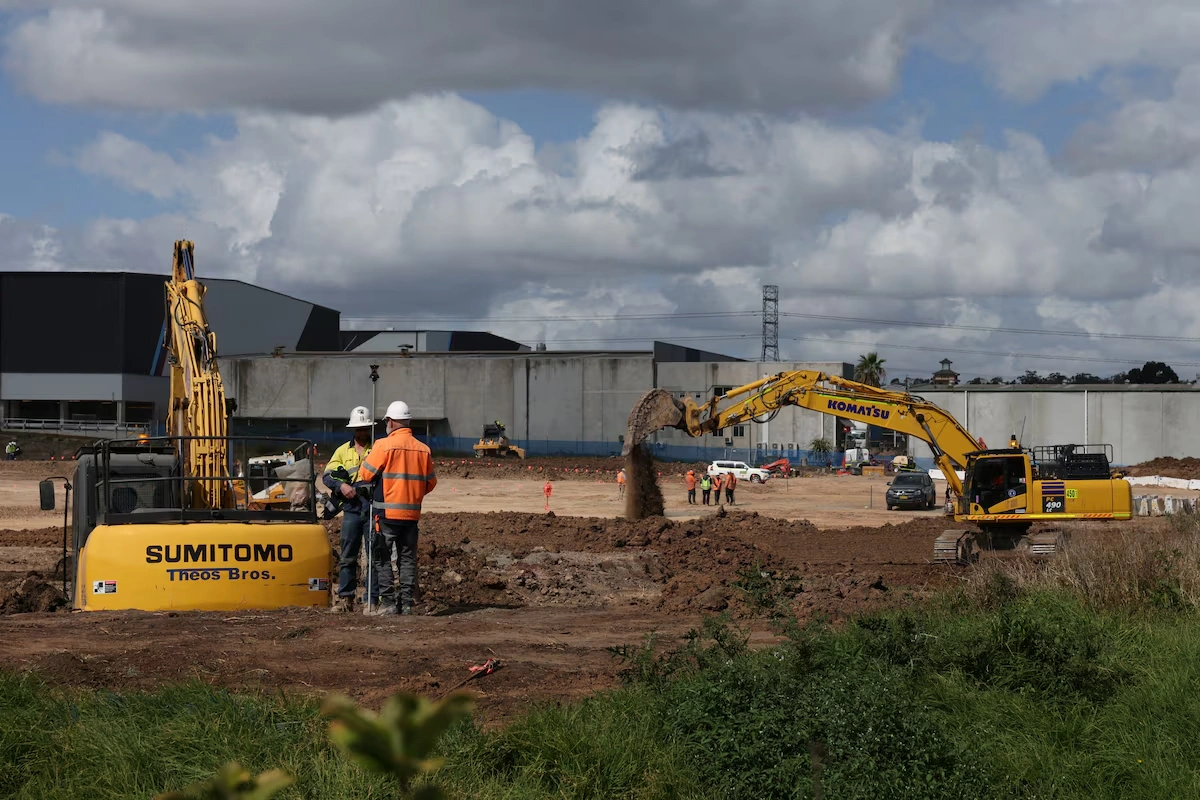
Australian business investment surges well above expectations
Australian business investment recorded a sharp increase in the September quarter of 2026. Data from the Australian Bureau of Statistics showed that new capital expenditure rose 12.2% quarter-on-quarter to approximately A$59.5 billion.
The result was significantly above market expectations of around 4.4%. It was also the largest increase since the mining investment boom in 2011.
The figures suggest that corporate investment activity remains resilient despite higher financing costs and tighter monetary conditions.
In annual terms, total new capital expenditure increased 18.6%. The strongest contribution came from equipment, plant, and machinery, which rose 23.1% over the quarter.
Data-centre and AI infrastructure drive spending
A major factor behind the increase was stronger corporate investment in technology infrastructure, particularly data centres.
Reuters reported that spending on information and telecommunications equipment increased by approximately 87%. Businesses expanded purchases of data-centre servers and processing equipment to support growing computing requirements.
The investment surge reflects the infrastructure needs of digital services and artificial intelligence.
However, a significant share of the equipment was imported. This means that the increase in equipment purchases may not translate into an equally large contribution to domestic production.
Even so, higher investment can support business activity, construction demand, technology services, and the data-centre ecosystem over the medium term.
Investment plans for 2026–2027 are revised higher
In addition to the September-quarter figures, Australian businesses raised their expected capital expenditure for the financial year ending June 2027.
The fourth estimate of investment for 2026–2027 increased by 11.8% to A$223.7 billion compared with the previous estimate.
The upward revision suggests that companies remain willing to expand investment despite tighter financing conditions.
Reuters noted that technology investment is likely to remain an important source of growth, while activity in several other sectors remains subdued.
Implications for the Reserve Bank of Australia
Stronger investment data could influence market expectations for the Reserve Bank of Australia’s monetary policy.
If investment activity and domestic demand remain resilient, the central bank may have less reason to cut interest rates quickly.
Reuters reported that markets still expect eventual monetary easing, but do not fully price in a first cut before August. A June reduction is considered possible, but remains uncertain.
The investment figures should also be assessed alongside Australia’s inflation developments. If investment remains strong while inflation proves persistent, the RBA may have less room to ease monetary policy.
Implications for AUD/USD
Economic data that significantly exceeds expectations can support a domestic currency by improving perceptions of economic strength and the potential interest-rate outlook.
In this case, the Australian dollar could receive support because the capital-expenditure figures indicate that businesses remain active investors.
However, AUD/USD is not driven by Australian data alone. The US dollar, Federal Reserve expectations, commodity prices, and global risk sentiment remain important factors.
If investors conclude that stronger investment will encourage the RBA to keep rates higher for longer, the Australian dollar could strengthen. If global risk aversion returns, however, gains in the currency may be limited.