Oil Prices Decline, but Risks to Saudi Energy Facilities Limit Losses
Crude oil prices weakened on Monday, November 23, 2026, amid pressure across global financial markets and concerns about the growth outlook for the technology sector. However, losses remained limited as the conflict involving Iran, attacks on Gulf shipping, and Houthi claims of an attack on a Saudi oil refinery continued to raise concerns about potential supply disruptions.
Reuters reported that Brent crude fell approximately 0.30% to $92.29 per barrel, while West Texas Intermediate (WTI) declined around 0.18% to $83.26 per barrel at 0216 GMT. The move extended the previous week’s losses, when Brent fell approximately 4% and WTI declined around 5%.
Houthi Claim of an Attack on a Saudi Refinery Draws Market Attention
One factor limiting oil-price declines was a claim by the Houthi movement that it had attacked an oil refinery in Saudi Arabia on Sunday, November 22, 2026.
The claim is significant because Riyadh had already experienced a series of security threats and incidents linked to the Houthi movement. However, it is important to distinguish between the reported claim and independently confirmed damage. Reuters’ November 23 report conveyed the Houthi claim but did not establish that the refinery had suffered damage or halted production.
For energy markets, the main concern is whether attacks actually affect oil production, processing, storage, or distribution facilities. Disruptions to these facilities could reduce available supply and affect exporters’ ability to deliver crude to international markets.
Saudi Arabia plays a major role in global oil trade. Therefore, threats against its energy infrastructure may increase geopolitical risk premiums even without confirmed reductions in production volumes.
The Strait of Hormuz and Gulf Shipping Routes Remain at Risk
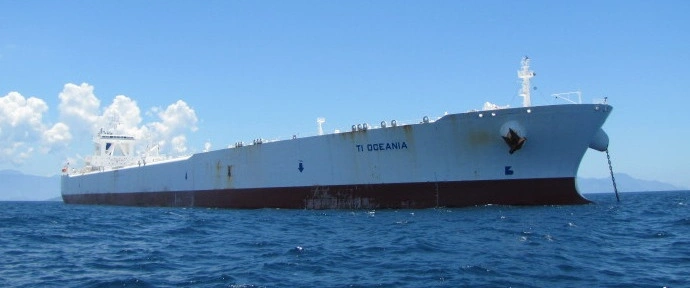
In addition to the claim involving the Saudi refinery, Reuters reported several attacks on vessels operating in the Gulf and near the Strait of Hormuz over the weekend.
The Strait of Hormuz is a critical route for global oil shipments. Deteriorating maritime security creates risks beyond direct damage to vessels. It can also lead to delivery delays, higher insurance costs, and decisions by shipping companies to change routes.
An oil analyst quoted by Reuters warned that the number of empty tankers waiting for cargo was increasing, while the number of loaded vessels was declining. This may be an early indication that oil shipping flows are facing obstacles. If the situation continues, the risk could eventually be reflected in crude prices.
The market is therefore facing two opposing forces: downward pressure from global market sentiment and demand expectations, and potential upward pressure if energy shipping disruptions become more severe.
Global Equity Weakness Also Weighs on Oil Prices
Another factor pressuring crude prices is weakness across global equity markets. Concerns about the scale of investment in AI and whether those investments will generate sufficient returns have triggered selling in technology stocks.
Reuters reported that South Korean shares fell around 4% in early trading, while markets in China, Hong Kong, and Australia also declined. The Nasdaq had already fallen approximately 10% during the previous week.
This environment can influence expectations for economic growth and energy demand. If investors anticipate slower economic activity, expected oil consumption for transportation, manufacturing, and industrial production may also be revised lower.
This helps explain why oil prices can decline even as geopolitical risks in the Middle East increase. Market participants are assessing not only potential supply disruptions but also the possibility of weaker global demand.
OPEC+ Becomes the Next Important Event
The market is also looking ahead to the OPEC+ meeting scheduled for November 29, 2026. The meeting will address the group’s oil production policy for 2027.
OPEC+ decisions could influence the balance between global supply and demand. If producers maintain output restrictions, this may provide support for crude prices. Conversely, a policy that allows higher production could add pressure if global demand is weakening.
Reuters also reported that COP31 negotiations in Turkey failed to reach an agreement on including commitments to phase out fossil fuels in the final document. The disagreement between oil-producing countries and those advocating an energy transition highlights the continuing complexity of global energy policy.
Potential Impact on Forex, Gold, and Equity Indices
Gold (XAU/USD) may receive support if Middle East tensions intensify and investors seek safe-haven assets. However, if equity-market pressure dominates and the US dollar strengthens, gold’s gains may be limited.
The DXY could attract demand if geopolitical and financial uncertainty increases the need for liquid assets. AUD/USD may face pressure if investors reduce exposure to risk-sensitive currencies, although commodity-price changes can also influence the Australian dollar.
For EUR/USD and GBP/USD, stronger demand for the US dollar as a safe haven may become a source of pressure. USD/JPY could experience volatility because both the US dollar and Japanese yen may attract safe-haven flows.
In equity markets, a sharp increase in energy prices could raise operating costs and inflation expectations. The Dow Jones and S&P 500 may be affected through industrial, transportation, and consumer sectors. The Nasdaq 100 is more sensitive to changes in interest-rate expectations, while the Russell 2000 may face pressure from higher energy and financing costs.
Scenarios to Watch
If attacks on energy facilities are not confirmed to have caused damage and shipping routes remain operational, weaker demand expectations and negative global market sentiment may continue to limit oil prices.
Conversely, if attacks on refineries or tankers are confirmed and result in shipping disruptions, geopolitical risk premiums could increase. Oil prices may rise even while global equity markets remain under pressure.
Conclusion: oil prices remained weaker on November 23 due to negative global market sentiment, but threats to Saudi refineries and shipping near the Strait of Hormuz limited further declines. Traders should monitor confirmed damage to energy facilities, tanker security developments, and the November 29 OPEC+ meeting.