US Midterm Election Results Trigger Global Market Volatility
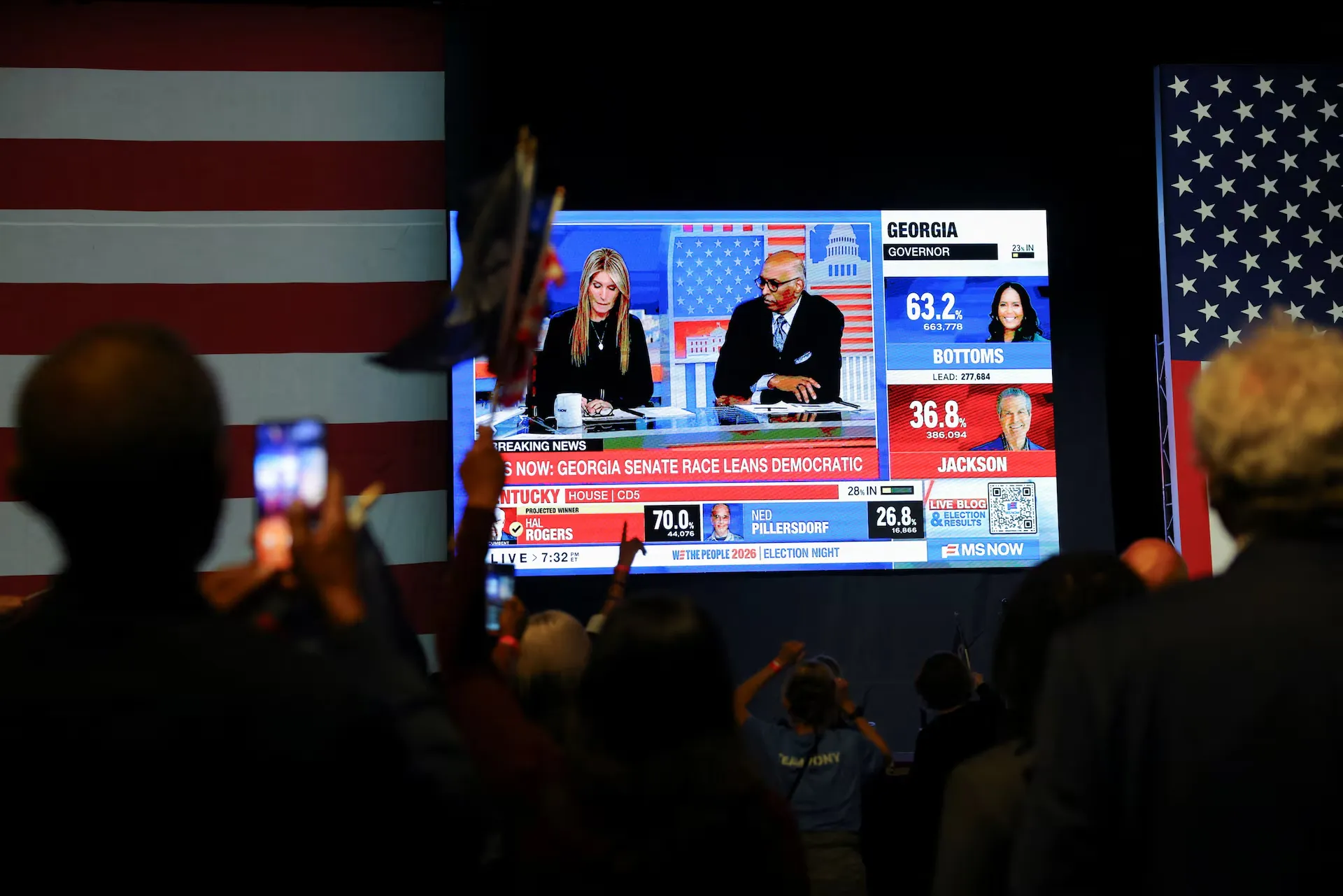
The 2026 US midterm elections triggered a sharp market reaction after the Democratic Party secured control of both chambers of Congress, the Senate and the House of Representatives. The result introduced a new period of divided government in Washington and prompted investors to reassess the outlook for US fiscal policy, technology regulation, Treasury yields, and the US dollar.
According to Reuters on November 4, global markets initially came under pressure as investors considered the implications of a Democratic-controlled Congress. However, the initial sell-off did not persist uniformly. Global equities and US stock futures recovered some of their earlier losses as trading progressed, demonstrating that investors were still evaluating the potential economic and corporate consequences of the election outcome.
Why the Election Result Matters to Financial Markets
Control of Congress can influence legislation, government spending, taxation, and oversight of major industries. With Democrats controlling both chambers, the legislative environment facing President Donald Trump is expected to become more challenging.
A divided government can make it harder to pass new legislation, including proposals involving taxes, public spending, and economic policy. Some investors view this as a possible constraint on additional fiscal stimulus and government expenditure. Others are concerned that political disagreements could create uncertainty around the federal budget, debt negotiations, and future policy decisions.
Nevertheless, a change in congressional control does not automatically reverse existing policies. The president retains executive powers and the ability to veto legislation, while Senate procedures can also limit which proposals become law. Consequently, the actual economic impact will depend on the measures Congress pursues and whether policymakers can reach agreements.
For financial markets, the key issue is not simply which party won the election. Investors must assess how the result could change future economic growth, corporate earnings, inflation expectations, and the direction of monetary policy.
Technology Stocks Face Greater Regulatory Uncertainty
One of the most closely watched consequences is the potential for stronger scrutiny of artificial intelligence. The rapid expansion of AI has encouraged major technology companies to invest heavily in data centers, computing infrastructure, and advanced semiconductors.
Investors are concerned that tighter oversight could affect the pace of AI development or increase the cost of expanding data-center infrastructure. Communities in states such as Texas and Georgia have also raised concerns about the environmental impact of data centers and their potential effect on energy costs.
These concerns put technology-related shares under pressure during the initial market reaction. Reuters reported that Nasdaq 100 futures fell as much as 2.4% before recovering some losses. Several large technology companies also traded lower in European markets.
However, the election result does not necessarily mean that AI investment will stop or that every technology company will experience weaker earnings. Demand for computing capacity remains an important driver of the sector. Investors will need to distinguish between companies exposed to potential regulatory restrictions and businesses that can continue to benefit from demand for AI infrastructure.
The Nasdaq 100 is therefore a key index to watch as investors assess whether political concerns will lead to a sustained change in technology valuations.
US Dollar Weakens as Treasury Yields Decline
The US dollar also came under pressure after the election results became clearer. Reuters reported that the dollar weakened against major currencies as US Treasury yields declined and investors reassessed the outlook for government spending and interest rates.
The benchmark 10-year Treasury yield fell to around 4.92% during the reported market session. Bond prices generally move in the opposite direction to yields, so the decline in yields reflected increased demand for US government bonds.
One possible explanation is that investors expected a divided government to make additional fiscal stimulus or tax-cut proposals more difficult to pass. Expectations of slower government spending can affect the outlook for economic growth, inflation, and future Federal Reserve decisions.
However, the relationship between the election and the dollar is not straightforward. The currency will continue to respond to incoming economic data, inflation, employment figures, and changes in expectations for Federal Reserve policy. A stronger-than-expected US economic report could support the dollar even if political uncertainty remains elevated.
Currency traders should therefore monitor the US Dollar Index alongside Treasury yields and upcoming economic releases rather than treating the election outcome as a standalone directional signal.
Implications for Major Currency Pairs
A weaker US dollar can support currencies such as the euro and the British pound. Reuters reported that the euro and pound strengthened against the dollar during the market reaction, while the Japanese yen also gained as investors sought defensive assets.
EUR/USD and GBP/USD may remain sensitive to changes in the dollar and US bond yields. Nevertheless, their performance will also depend on economic conditions and monetary policy expectations in the eurozone and the United Kingdom.
USD/JPY is influenced by both the US dollar and demand for the yen as a potential safe-haven currency. A further decline in US Treasury yields could weigh on the pair, but changes in Japanese monetary policy and global risk sentiment may alter the direction.
The Australian dollar can also respond to broad dollar movements, but AUD/USD is particularly sensitive to global growth expectations and risk appetite. If uncertainty surrounding technology investment or the US economy weighs on global sentiment, that could offset some of the benefit from a weaker dollar.
Gold and Defensive Assets Attract Attention
Gold can benefit when the US dollar and Treasury yields decline because the metal becomes relatively more affordable for holders of other currencies and the opportunity cost of holding a non-yielding asset may decrease.
Reuters separately reported that gold rose by more than 2% on November 4, supported by the weaker dollar and falling Treasury yields following the Democratic victories. This movement is consistent with the broader shift toward defensive assets, although gold prices are also influenced by inflation expectations, central-bank policy, geopolitical developments, and physical demand.
The election outcome alone does not guarantee further gains. If yields rebound, the dollar strengthens, or investors reduce demand for defensive assets, gold could give back some of its advance. Traders should therefore consider the direction of real yields and the dollar when assessing the sustainability of the move.
What Traders Should Watch Next
The market impact will depend on how political developments translate into actual economic policy. Traders should monitor the following factors:
- US Treasury yields: Further declines may indicate continuing demand for bonds and could weigh on the dollar.
- Nasdaq 100: Price action may reveal whether concerns about AI regulation are becoming a broader reassessment of technology valuations.
- US Dollar Index: The dollar’s direction will depend on yields, economic data, and expectations for Federal Reserve policy.
- Gold (XAU/USD): The interaction between the dollar, real yields, and demand for defensive assets will be important.
- Economic releases: Employment, inflation, and activity data may shift market attention away from the election and toward the US economic outlook.
- Fiscal negotiations: Disagreements over spending, taxation, or the federal budget could create additional volatility if they become more concrete.
Conclusion
The 2026 US midterm elections created a new source of uncertainty for global markets. The initial reaction included pressure on US stock futures and the dollar, falling Treasury yields, and stronger interest in defensive assets. Equities subsequently recovered some losses, showing that investors were weighing the risks rather than responding in a single direction.
The most important developments to monitor are potential changes in AI regulation, fiscal policy, Treasury yields, and expectations for Federal Reserve decisions. The election provides important context for market analysis, but it should not be used as the sole basis for a trading decision. Confirmation from price action and economic data remains essential.