Asian Shares Slip as Oil and Geopolitical Risks Rise
Asian shares edged lower on Wednesday as investors balanced record highs on Wall Street against rising oil prices and escalating tensions between Saudi Arabia and Yemen’s Iran-backed Houthis.
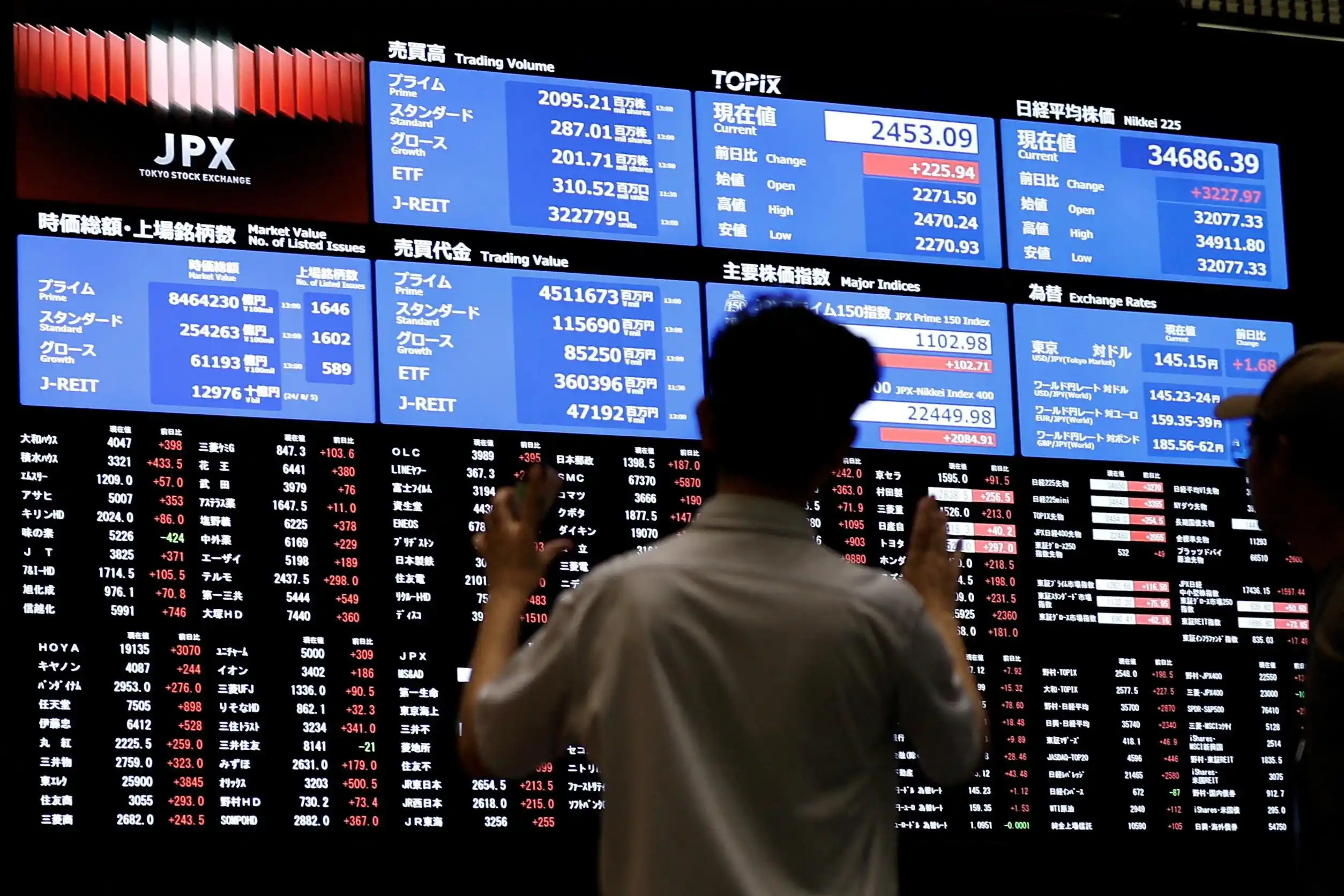
MSCI’s broadest index of Asia-Pacific shares outside Japan fell 0.3%, although the index remained up 1.5% for the month. Japan’s Nikkei declined 0.86%, while Hong Kong’s Hang Seng fell 0.63%. Australian shares were little changed, while mainland Chinese markets remained closed for a holiday.
Wall Street reaches fresh records
The weaker Asian session followed another strong performance on Wall Street. The S&P 500 gained about 0.6% and reached a fresh record, while the technology-heavy Nasdaq rose 0.45% to another all-time high. The Dow Jones Industrial Average added 0.5%.
Technology stocks continued to support U.S. equities, while investors were also looking ahead to the third-quarter corporate earnings season.
However, rising oil prices created another source of concern because higher energy costs can add to inflationary pressure.
Oil climbs amid Middle East tensions
U.S. crude rose 1.05% to $90.38 a barrel, while Brent crude gained 1.06% to $101.65 a barrel in Asian trading.
Investors were weighing the potential impact of a storm heading toward oil-producing areas in the Gulf of Mexico and attacks involving Yemen’s Houthis and Saudi Arabia.
At the same time, Middle Eastern crude exports have recovered. Vitol CEO Russell Hardy said around 12 million barrels per day of crude oil and 2 million barrels per day of refined products had left the Middle East on tankers over the previous seven to 10 days.
Bond markets and the Fed remain in focus
European bond markets showed some signs of stabilisation after French government bond yields fell sharply. Ten-year French yields dropped more than 11 basis points, narrowing the spread with German government bonds.
The move helped the euro stabilise above $1.1250.
U.S. Treasury yields remained elevated ahead of a $39 billion 10-year bond auction. Investors are also awaiting the Federal Reserve’s September meeting minutes for further clues about future interest-rate decisions. Expectations for an October rate increase have fallen to around 19%, from about 50% a week earlier.