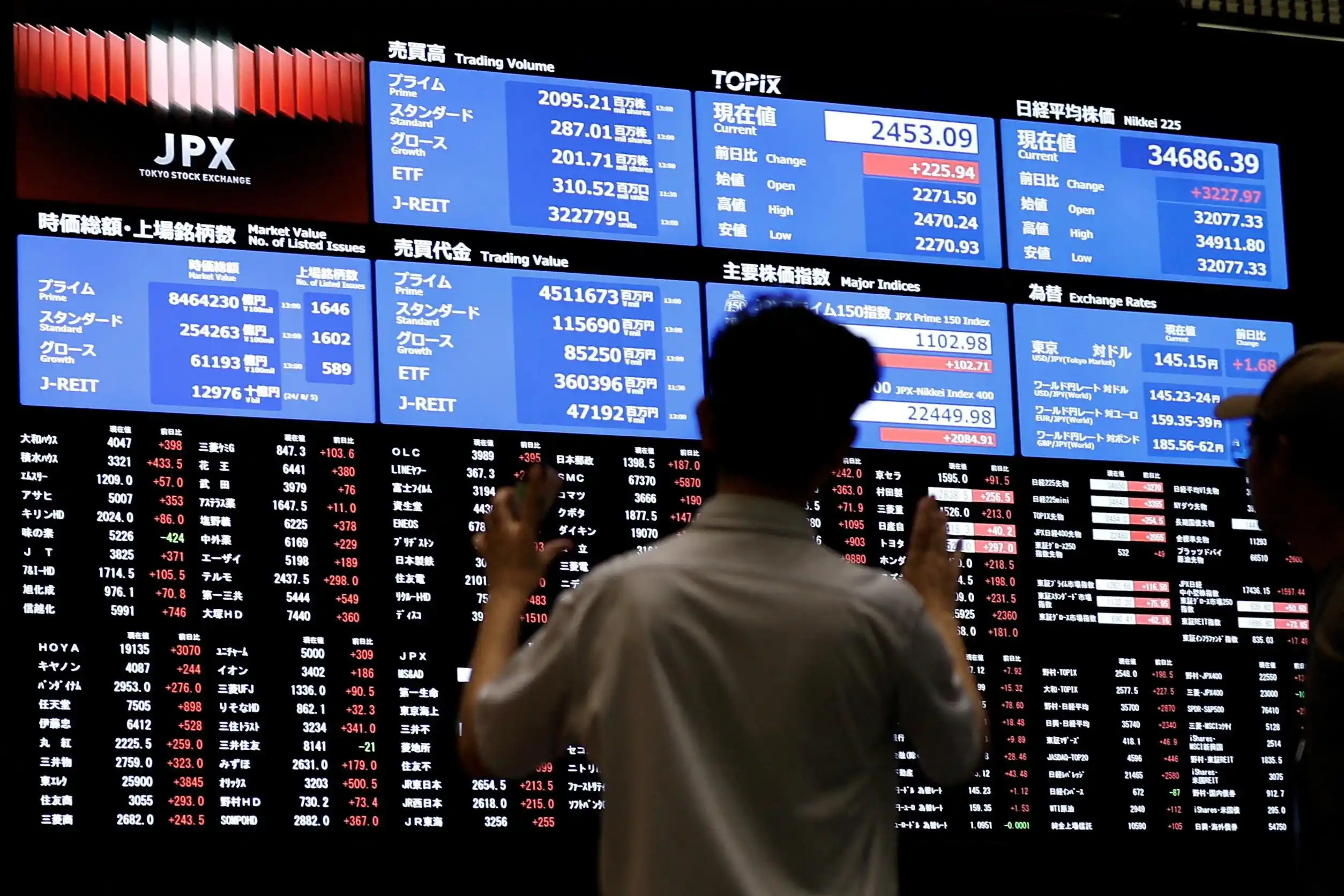
Asian shares head for a second weekly decline
Asian stocks were heading for a second consecutive weekly decline on Friday. Investors were concerned about higher energy prices, turbulence in bond markets and the large sums needed to finance artificial intelligence investment.
The MSCI Asia-Pacific index excluding Japan was on course to fall nearly 1% for the week. It rose 0.5% on Friday in thin trading, as markets in South Korea and Taiwan were closed for a holiday.
Japan’s Nikkei fell 0.25%. European futures pointed to a higher opening, while Nasdaq futures rose 0.5% after technology shares led Wall Street’s main indexes lower overnight.
AI investment and fundraising attract attention
OpenAI was a major focus for investors after reports offered new estimates of its revenue. Reuters reported that the company told investors its annualised September revenue was almost $50 billion. Bloomberg reported that revenue could reach or exceed $70 billion by year-end.
Investors were also assessing planned fundraising by SpaceX, Broadcom and Oracle. The companies were expected to raise billions of dollars to purchase advanced AI chips.
Australian data centre operator Firmus, which is backed by Nvidia, shelved its planned $5 billion initial public offering. The company cited market volatility and conditions, saying it would instead pursue private fundraising.
Higher yields increase financing pressure
Higher energy costs, expectations of central-bank rate increases and concerns about government debt have contributed to a prolonged global bond selloff. The selloff has pushed borrowing costs higher.
Chris Weston of Pepperstone said investors were becoming more selective about their exposure and the prices they were willing to pay for future growth. Saxo’s Charu Chanana said high long-term yields meant investors could no longer value AI growth as if capital were cheap.
France was another focus. Investors were scrutinising its debt, budget deficit and political outlook ahead of the 2027 presidential election. The US 10-year Treasury yield stood at 5.226%, close to the 24-year high of 5.364% reached on Wednesday.
The dollar remained firm, while the euro was heading for a fifth consecutive weekly decline near $1.123.